Showing posts with label sculpture. Show all posts
Showing posts with label sculpture. Show all posts
Friday, April 14, 2017
Hot Cross Buns
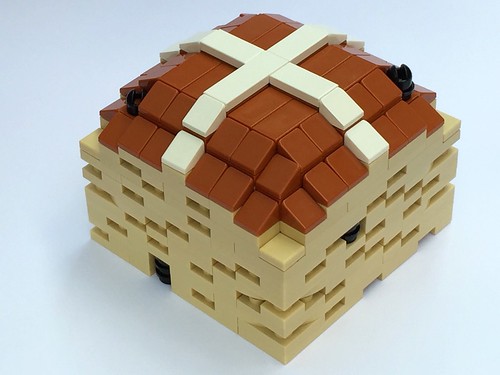
Hot Cross Buns (here in LEGO by Brick Blue Wren) are traditionally served on Good Friday. Historically, bread was made without dairy during lent, and these spiced sweet buns, usually with raisins or currants, mark the end of lent at mid-day on Friday. The spices point back to the embalming spices used in the tomb and the icing cross, of course, points to the cross of Christ.

Tuesday, April 11, 2017
Sedar
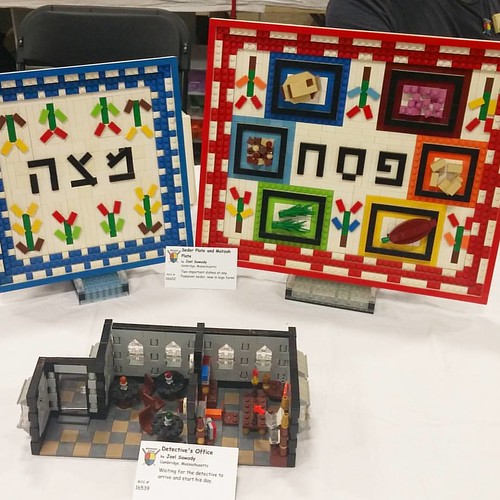
The Sedar is the meal shared last night on the first evening of Passover. Joel Sawady built LEGO Sedar and matzah plates, that sit in the middle of the table. The Sedar plate (here in red), holds six items that point to the Exodus account. The matza, or unleavened bread, sits on a separate plate (here in blue).
Sunday, December 6, 2015
Happy Hanukkah
This evening the first candle will light on menorahs around the world, celebrating the Jewish holiday of Hanukkah. This 14 foot menorah was erected this year outside a synagogue in northern Washington DC. That's not actual LEGO, instead it's EverBlock, a LEGO-like building material. The Rabbi wanted to build something like LEGO, just much larger, and partnered up with the president of EverBlock.


Tuesday, October 13, 2015
Bob and Larry
Cody Purviance made Bob and Larry from the Christian children's show Veggietales. Bob the Tomato and Larry the Cucumber tell Bible stories and also have generally silliness, while still reminding kids that "God made you special, and He loves you very much." BTW, even if the cartoon doesn't appeal to you (though it should), you definitely should listen to the show creator's podcast, the Phil Vischer Show.

Thursday, September 3, 2015
Cristo Redentor
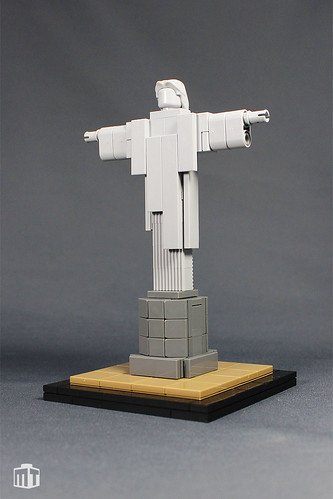
Jens Ohrndorf made this micro version of the Cristo Redentor statue that towers over Rio de Janeiro. BTW I've previously blogged two other versions of this, plus a few related MOCs.
Wednesday, June 24, 2015
The Church: Thermometer or Thermostat
Someone (who?) brought this MOC to the recent BrickWorld gathering, illustrating this passage from Martin Luther King Jr's Letters from a Birmingham Jail:
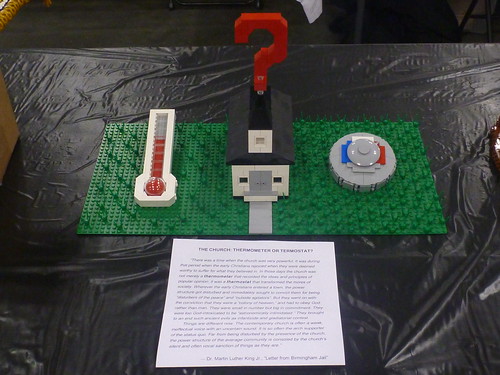
There was a time when the church was very powerful. It was during that period when the early Christians rejoiced when they were deemed worthy to suffer for what they believed in. In those days the church was not merely a thermometer that recorded the ideas and principles of popular opinion; it was a thermostat that transformed the mores of society. Wherever the early Christians entered a town the power structure got disturbed and immediately sought to convict them for being “disturbers of the peace” and “outside agitators”. But they went on with the conviction that they were a “colony of heaven,” and had to obey God rather than man. They were small in number but big in commitment. They were too God-intoxicated to be “astronomically intimidated.” They brought to an end such ancient evils as infanticide and gladiatorial contest. Things are different now. The contemporary church is often a weak, ineffectual voice with an uncertain sound. It is so often the arch supporter of the status quo. Far from being disturbed by the presence of the church, the power structure of the average community is consoled by the church’s silent and often vocal sanction of things as they are.
Monday, April 27, 2015
Tzedakah
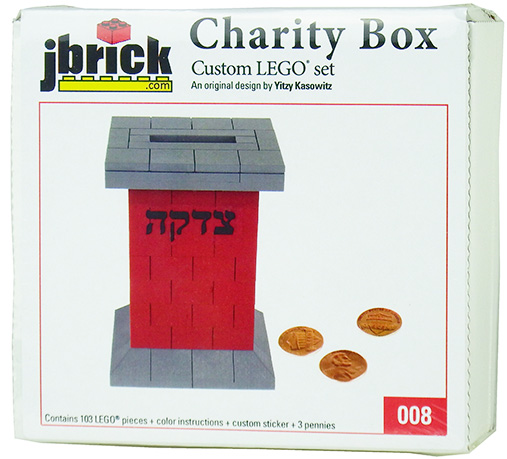
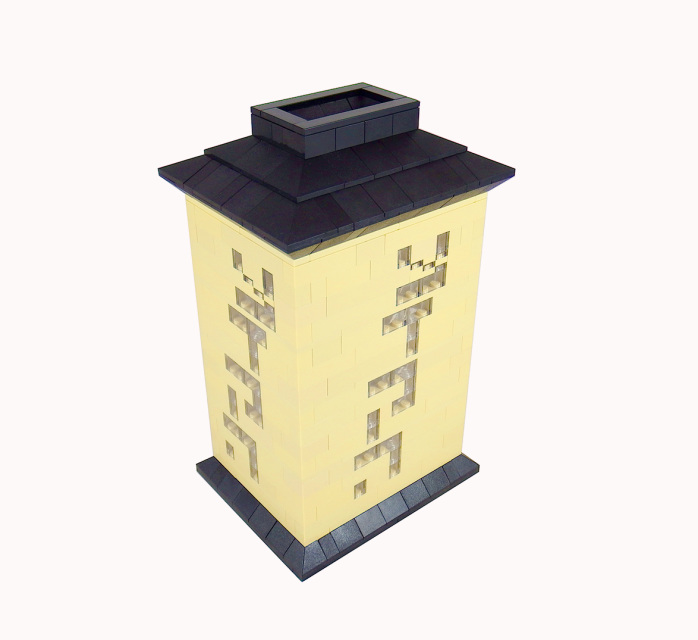
I've previously noted JBrick, started by Yitzy Kasowitz to create and sell Jewish-themed LEGO sets. Here we see two different sizes of tzedakah boxes. Tzedakah means charity, but the word comes from the same root as righteousness, justice, or fairness (see here), so giving is not just seen as generosity, but also fulfilling justice (see, for instance, Deuteronomy 10:18, "He [the Lord your God] executes justice for the fatherless and the widow, and loves the sojourner, giving him food and clothing. Giving is grouped with prayer and repentence in the liturgy of the High Holy Days. Many Jewish homes have a Tzedakah box to collect coins which will later be given to the needy. These boxes have the word Tzedakah in Hebrew, either in sticker form on the smaller boxes, or built into the LEGO bricks in the larger version.
Saturday, May 3, 2014
All scripture?
The missing chunks out of the Bible in BMW_Indy's II Timothy 3:16 are his commentary on how many Christians ignore parts that are inconvenient to them, while ALL scripture is God-breathed.

Tuesday, April 29, 2014
Anubis
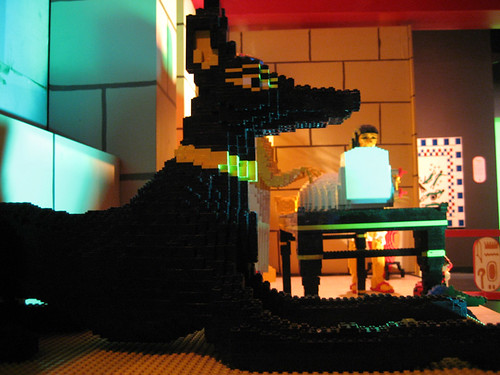
Here are some more LEGO renditions of Anubis:
Pascal built this temple.
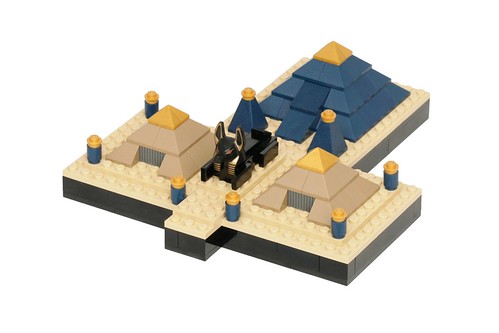
Sir Nadroj built these statues.
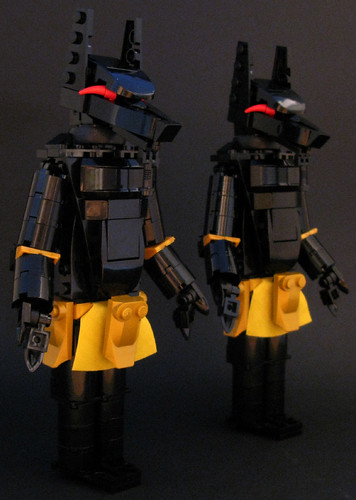
David Alexander Smith made Anubis and Ra.

This version was in the "LEGO: Secrets of the Pharoahs display at Science World Vancouver.
Pascal built this temple.
Sir Nadroj built these statues.
David Alexander Smith made Anubis and Ra.
This version was in the "LEGO: Secrets of the Pharoahs display at Science World Vancouver.
Saturday, April 26, 2014
Anubis
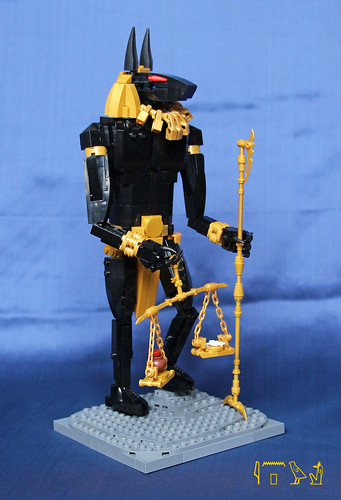
One of the roles of Anubis in ancient Egyptian belief was the weighing of the heart. After death, Anubis would compare the deceased's heart to an ostrich feather representing truth. If the heart was heavier (therefore impure), the demon Ammit would devour the soul. Otherwise the soul would go on to immortality with Osiris. Inquisitor88 depicts Anubis and his scales.
Friday, April 25, 2014
Tuesday, September 10, 2013
St Francis of Assisi
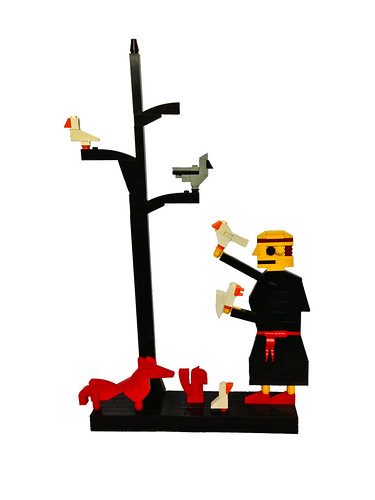
Sorry about the lack of blog posts for three weeks, life has been hectic. In the meantime I've bookmarked a lot of MOCs to put here. For instance, David Alexander Smith built St Francis of Assisi.
Wednesday, August 14, 2013
You put the lime in the coke, you nut
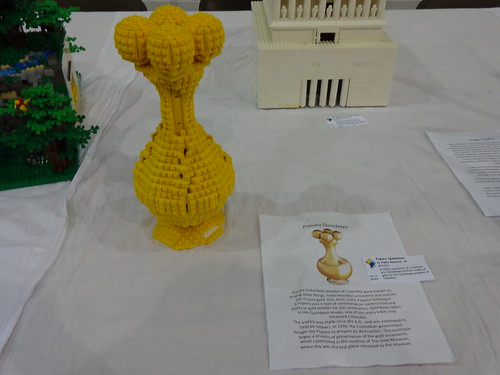
In ancient times, the chewing of coca leaves was part of certain religious ceremonies in different cultures in the Andes of South America. The stimulant properties of the leaves are enhanced by adding a little bit of quicklime, as this helps neutralize stomach acid and increase the absorption of the alkaloids into the bloodstream. This lime was kept in ceremonial vessels known as poporos. Pablo Ramirez built this rendition of the Poporo Quimbaya, a gold artifact of the Quimbaya civilization dated to about 1700 years ago. This container has become somewhat of a symbol of pre-Columbian culture in Columbia, and appears on some of their currency.
*While the practice of chewing coca leaves was restricted to upper classes in certain ceremonial uses in earlier times, in recent centuries it has become very common in some Andean regions. This has become a source of contention, as the US and international organizations wanting to stop the production of cocaine have come up against poor farmers who defend the production and chewing of the leaves (with a small amount of lime) as an indigenous practice. I've read conflicting reports from people on both sides of this, with some referring to the practice as essentially a low grade cocaine addiction, and others saying it is a folk remedy for altitude sickness and less of a kick than a cup of coffee.
**BTW, despite my title, the mineral lime used in the chewing of coca leaves has no relation to the citrus fruit lime. The word for the mineral comes from the Old English lim, which refers to a sticky substance, as lime was used in making mortar. The word for the fruit comes from the Arabic limah, referring to a citrus fruit. It's ironic that these two different meanings ended up with the same word in modern English, since the mineral is basic and the fruit is acidic. On the other hand, coca leaves are used in the production of Coca Cola, though ever since 1904 the leaves have first been processed to remove any cocaine.
*While the practice of chewing coca leaves was restricted to upper classes in certain ceremonial uses in earlier times, in recent centuries it has become very common in some Andean regions. This has become a source of contention, as the US and international organizations wanting to stop the production of cocaine have come up against poor farmers who defend the production and chewing of the leaves (with a small amount of lime) as an indigenous practice. I've read conflicting reports from people on both sides of this, with some referring to the practice as essentially a low grade cocaine addiction, and others saying it is a folk remedy for altitude sickness and less of a kick than a cup of coffee.
**BTW, despite my title, the mineral lime used in the chewing of coca leaves has no relation to the citrus fruit lime. The word for the mineral comes from the Old English lim, which refers to a sticky substance, as lime was used in making mortar. The word for the fruit comes from the Arabic limah, referring to a citrus fruit. It's ironic that these two different meanings ended up with the same word in modern English, since the mineral is basic and the fruit is acidic. On the other hand, coca leaves are used in the production of Coca Cola, though ever since 1904 the leaves have first been processed to remove any cocaine.
Friday, July 26, 2013
Sunday, May 19, 2013
Durga Puja
Durga Puja is an annual fall six day festival by Hindus, particularly in eastern India and Bangladesh, celebrating the visit of the goddess Durga and her children, before returning again to the Himalayas to be with her husband Shiva. One of the traditions is the building of Pandals, temporary structures housing an idol of the goddess, essentially temporary temples. People visit these in a very festive atmosphere, also a time for food, music and dancing. The Pandals are often fancifully decorated, and sometimes are based around themes, and can be a year in the planning, only to be torn down after the festival is over. It sort of reminds me of some of the elaborate floats in the Rose Parade in the US. A couple of years ago, West Bengal was home to a LEGO themed Pandal. Sadly, it's actually built of wood, not LEGO.


Thursday, May 16, 2013
Rosary
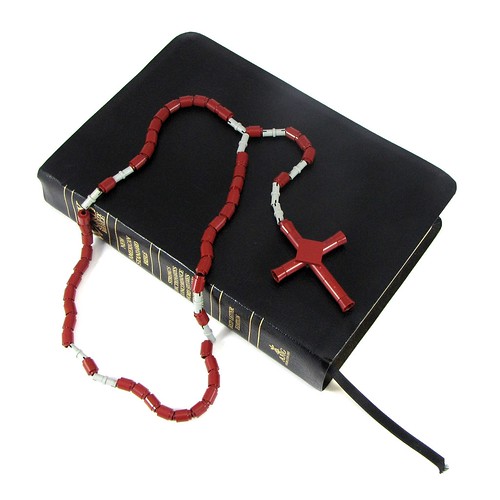
In Roman Catholicism, the rosary is a set of prayer beads, a tool to aid in prayer and meditation. As the practitioner counts their way around the necklace, they recite a number of prayers in a prescribed order, including the Lord's Prayer, the Hail Mary, and the Doxology. Praying the rosary is particularly important as an aspect of Marian devotion. Cmaddison made this LEGO rosary.
Monday, May 13, 2013
Scrolls
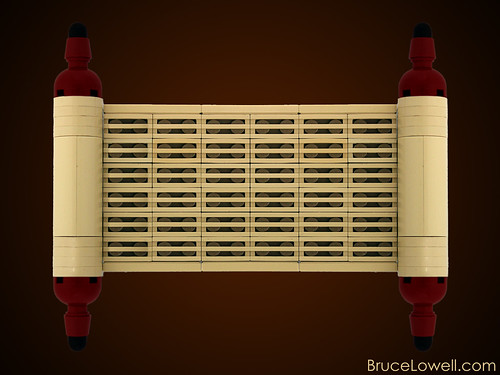
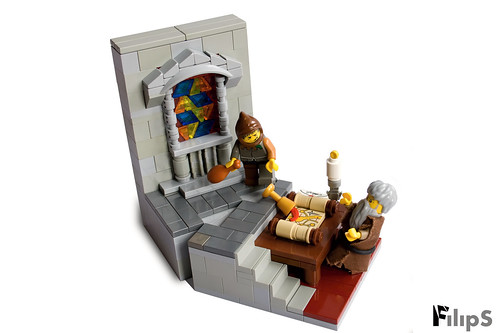
Scrolls are necessarily religious, but that's how we generally see them. Scrolls were long strips of papyrus or parchment (or shorter pieces glued together) rolled around two dowels. They were first invented in the Mediterranean region, maybe Egypt, some time between 2000 and 1000 BC. They stayed in general use until some time into the Roman era, eventually supplanted by the codex, or bound book, invented in the first century AD. In ancient times scrolls were used for really any longer work, certainly including religious works. Today scrolls are still used in ceremonial reading from the Sefer Torah, a hand written scroll of the Torah used for ritual reading during services in a synagogue. BTW, here's a fun scroll fact - the work for scroll in Latin is VOLVME, which is the source in English both for the word 'volume' and the word 'revolve'. Here are a couple of wonderful renditions of scrolls in LEGO form by Bruce Lowell and Filip Soukup.
Wednesday, May 1, 2013
Bob and Larry
Veggie Tales is a series of Christian children's videos where vegetables (yes, if you don't believe me, you'll just have to watch them) act out Bible stories and other tales with moral messages. The main characters are Bob the Tomato and Larry the Cucumber, and they've also inspired several LEGO representations.
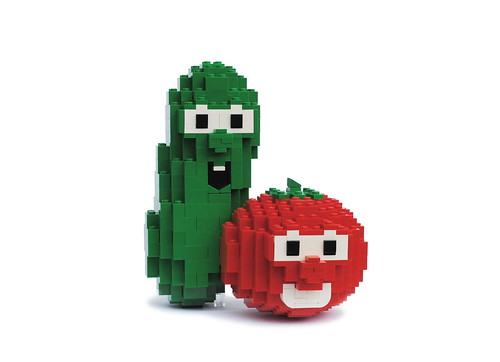
BriXwerX made this Bob and Larry as a gift. They were a scaled-down version of an earlier MOC.


I've previously noted Joshua Christenson's MOC.
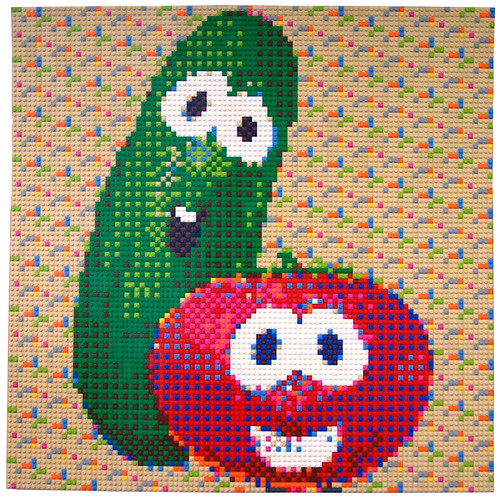
Chris Howard made a great mosaic.
Goldcreek made several characters.


BriXwerX made this Bob and Larry as a gift. They were a scaled-down version of an earlier MOC.
I've previously noted Joshua Christenson's MOC.
Chris Howard made a great mosaic.
Goldcreek made several characters.
Tuesday, April 9, 2013
Calvary
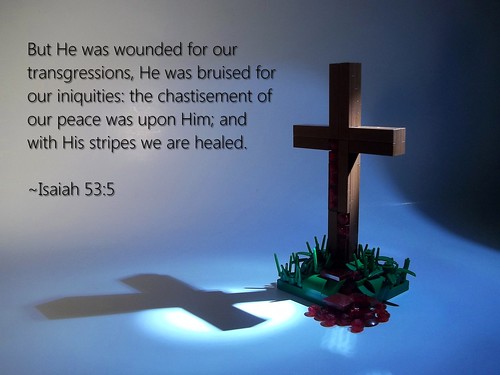
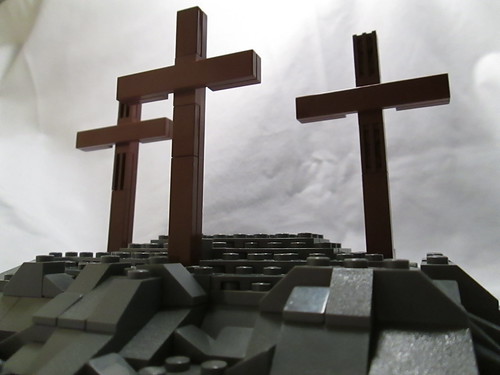
More Easter creations. TheBricks built He was wounded for our transgressions and JustinM built He died on the cross for our sins.
Friday, March 29, 2013
Good Friday
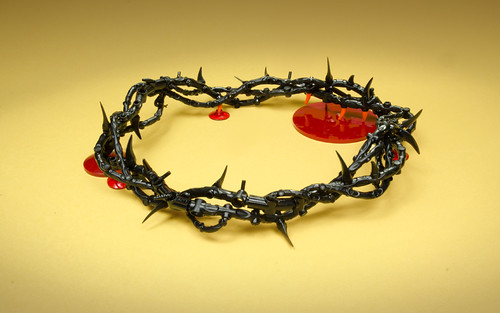
They dressed Him up in purple, and after twisting a crown of thorns, they put it on Him; 18 and they began to acclaim Him, “Hail, King of the Jews!” They kept beating His head with a reed, and spitting on Him, and kneeling and bowing before Him. After they had mocked Him, they took the purple robe off Him and put His own garments on Him. And they led Him out to crucify Him. - Mark 15:17-20
BMW_Indy made this amazing MOC - John 3:16.
BMW_Indy made this amazing MOC - John 3:16.
Subscribe to:
Posts (Atom)